Creating an animated clip of a character running on water can be a real challenge. Many animators get stuck on the physics and fluid dynamics, making it tough to achieve that realistic, engaging look. But don’t worry, I’ve got some solid tips and techniques to help you out.
This guide is packed with expert insights and practical advice from experienced animators. You’ll find step-by-step instructions and best practices to create a visually stunning scene. sonic running on water gif is a great example to keep in mind. Let’s dive in and make your animation stand out.
Understanding the Basics of Animation
Alright, let’s dive into the basics of animation. First things first, you need to understand a few key principles.
Timing and spacing are crucial. They control how your characters move and feel. Get these wrong, and your animation will look stiff and unnatural.
Squash-and-stretch is another big one. It gives your animations that bouncy, lifelike quality. I once made the mistake of ignoring this, and my character looked like a robot.
(Not exactly what I was going for.)
Tools Overview:
- Adobe Animate
- Blender
- Toon Boom Harmony
These are some of the top tools out there. Each has its strengths, so pick the one that fits your project best. I started with Blender, thinking it would be easy.
Boy, was I wrong. It took me weeks to get the hang of it. But once I did, it was worth it.
Pre-Production Tips:
Storyboarding is a must. It helps you plan out your sequence before you start animating. Skipping this step can lead to a lot of wasted time and frustration.
Trust me, I’ve been there.
Planning the sequence is just as important. You need to know where your story is going. Otherwise, you’ll end up with a jumbled mess.
(Been there, done that.)

Pro tip: Always keep your audience in mind. What do they want to see? How can you make your animation stand out?
These questions will guide you through the process and help you avoid common pitfalls.
Creating the Character
Designing a character that looks cool and can run on water? That’s a challenge. But it’s doable with the right approach.
First, think about the character’s design. You want something visually striking but also practical. I mean, if your character is going to be running on water, they need to look like they can handle it.
Think light, agile, and maybe a bit futuristic.
Next up, modeling and rigging. Whether you’re working in 2D or 3D, the key is to set up a rig that allows for smooth, fluid movement. This isn’t just about making the character move; it’s about making them move in a way that feels natural and believable.
Texture and shading are where the magic happens. Adding realistic textures and shading can make your character pop. It’s all about the details.
A well-textured character can go from looking flat to lifelike in no time.
And here’s a pro tip: Test, test, and test again. Make sure every part of your character moves as expected. It’s one thing to have a great design, but if it doesn’t work in motion, it’s back to the drawing board.
In the end, it’s all about balance. A character that looks good and moves well will stand out. And when they’re running on water, they’ll look like a true superhero.
Animating the Character’s Movement
When it comes to keyframe animation, some people argue that it’s too time-consuming. They say you should just use pre-made animations or motion capture. But here’s the deal.
If you want a truly unique and natural running motion, keyframes are your best bet.
You have more control over every little detail. It’s like sculpting a character’s movement frame by frame. Sure, it takes time, but the payoff is worth it.
Timing and Spacing
Timing and spacing can make or break your animation. Some folks think you can just set a few keyframes and call it a day. WRONG.
You need to tweak the timing and spacing to get that realistic running-on-water effect.
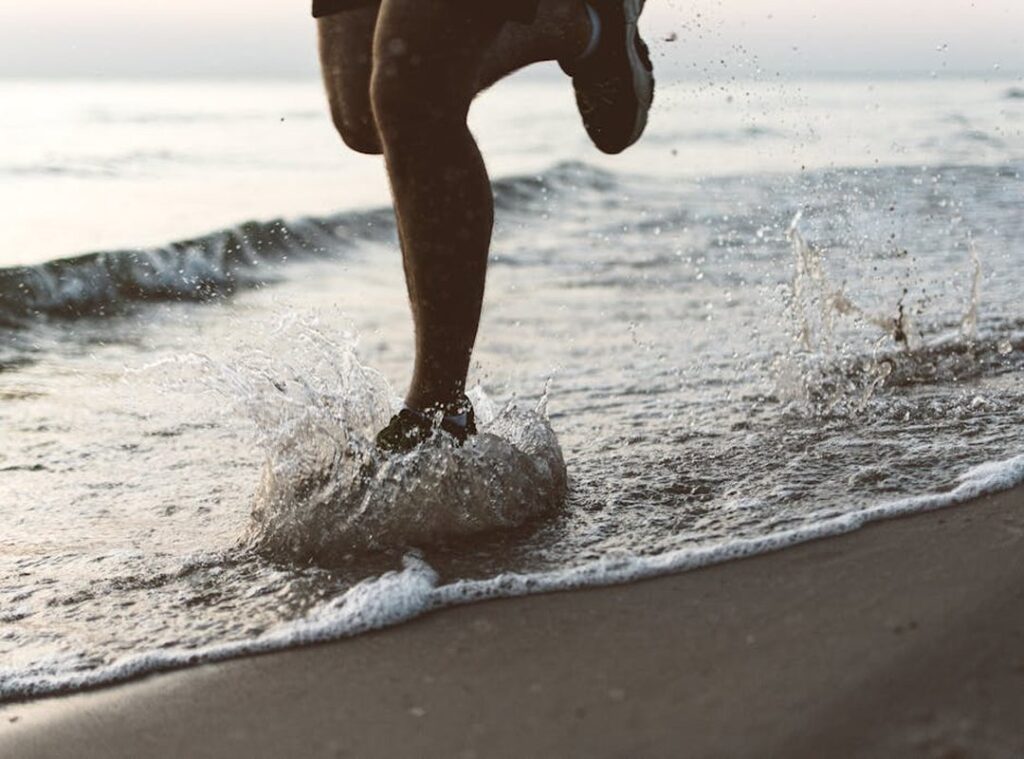
Think about how a character’s feet hit the water. The timing needs to be just right. Too fast, and it looks rushed.
Too slow, and it feels sluggish. It’s all about finding that sweet spot.
Secondary Actions
Adding secondary actions like hair and clothing movements can seem like overkill. Some might say it’s unnecessary. But trust me, these small details make a huge difference.
They add that extra layer of realism. Imagine Sonic running on water. His quills and shoes move with each step.
It’s those tiny details that bring the animation to life.
So, while it might take a bit more effort, the end result is an animation that feels alive and engaging. Don’t skip out on the details. They’re what make your work stand out.
Simulating Water Dynamics
Water simulation can be a real challenge. You’ve got to get it just right for it to look believable. There are a couple of main techniques: particle systems and fluid simulation tools.
Particle systems are great for creating splashes and small ripples. They’re easier to set up and can give you quick results. But they lack the realism of fluid simulators.
Fluid simulators, on the other hand, offer more detailed and realistic water effects. They can handle complex interactions and large bodies of water. The downside?
They require more computing power and can be a bit tricky to set up.
When it comes to making water react to a character’s movements, both methods have their pros and cons. Particle systems can create nice, localized splashes. Fluid simulators can produce more natural, widespread ripples and waves.

Reflections and refractions are key for adding that extra layer of realism. They make the water look more lifelike and enhance the overall visual quality.
You can use shaders to add these effects. Shaders are like little programs that run on your graphics card. They can simulate how light interacts with the water surface, creating those beautiful reflections and refractions.
In the end, it all depends on what you need. If you’re looking for something quick and easy, go with particle systems. For more realism and detail, fluid simulators are the way to go.
And hey, if you’re into details, you might also want to check out the role of antioxidants in your skincare routine. It’s all about getting the little things right, whether it’s in your simulations or your skincare.
Adding Visual Effects and Polishing the Scene
Visual effects can really make a scene pop. Incorporating additional effects like mist, droplets, and light rays enhances the overall look and feel. It’s all about creating that wow factor.
Lighting is key. Setting up the right lighting can totally change the mood and atmosphere. Think about what you want to convey—dramatic, serene, or something in between.
Good lighting makes everything else fall into place.
Final touches are where the magic happens. Adjusting colors, adding filters, and fine-tuning the composition can take your scene from good to great. These tweaks can make a huge difference in how the final product looks.
Getting these elements right means your scene will stand out. It’s not just about making it look pretty; it’s about making it memorable. Trust me, a little extra effort here goes a long way.
Exporting and Sharing Your Animation
Rendering your animation right is key. You want high quality and smooth playback. (Think of it like Sonic running on water—smooth and seamless.)
First, choose the right settings. High resolution and a good frame rate make a huge difference. Don’t skimp on this part.
Now, let’s talk sharing. Uploading to social media or YouTube can get your work seen by a wider audience.
You can also share on animation platforms. These sites are great for feedback and connecting with other animators.
Remember, the goal is to get your work out there. So, pick the platform that fits your style and audience.
Bringing Your Animated Clip to Life
To create an animated clip of a character running on water, start by sketching out the key poses. Focus on the fluidity of motion and the interaction between the character’s feet and the water. Timing and spacing are crucial for conveying the right sense of movement and weight.
sonic running on water gif can serve as a great reference for how to animate this action smoothly. Pay close attention to the splash effects and ripples; these details add realism and visual interest.
Practice is essential. The more you refine your technique, the better your animations will become. Patience is also key, as perfecting the subtle nuances of such a dynamic scene takes time.
Experiment with different styles and techniques. Each project is an opportunity to learn and grow. Sharing your work with the community can provide valuable feedback and inspire others.